How to Moonwalk: Slow-Motion Step Player + 4-Stage Guide
Watch the moonwalk in slow motion from the side and learn it in 4 stages, from the easy moonwalk on the spot to the backslide, forward moonwalk and sideglide.

You must have tried this at least once. In the kitchen with socks on, or in a hallway when nobody was looking.
The moonwalk.
It's probably the most famous dance move in the world. Even people who never danced in their life know what it's supposed to look like. Your feet walk forward, but your body goes backward.
And almost everyone who tries it ends up the same way. Leaning back, dragging heavy feet across the floor, and calves burning after 2 minutes.
The problem is the order. Most people jump straight into Michael Jackson's backslide. In this post, we start with an easier version and build up to it step by step.
Watch the moonwalk in slow motion from the side, step through it one count at a time, and find out why yours sticks to the floor. Then practice along by ear.
Moonwalk Player
Watch the moonwalk in slow motion, step through it one count at a time, and see where the weight goes.
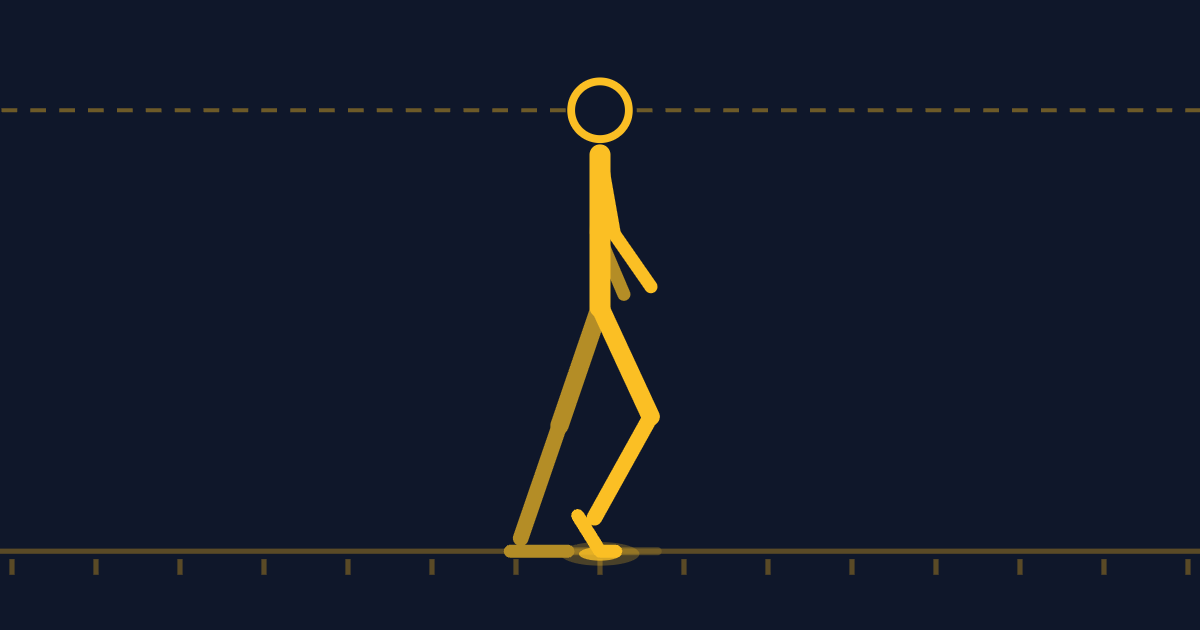
Glow = the foot carrying your weight. Dashed line = head height.
1. Pop your right heel high with the knee bent, and put all your weight on that right foot. Your left foot is flat and straight in front, with no weight on it.
2. Keeping your weight on the right foot, slide the flat left foot straight back behind you. Don't drop the right heel yet.
3. When the left foot finishes sliding, pause for a moment and switch. Drop the right heel flat and pop the left heel up. Your weight moves to the left foot.
4. Now the right foot is flat. Slide it straight back behind the left foot, pause, and switch again.
Remove the pause: Start the switch just before the sliding foot stops. Both feet should move at the same steady speed, like you are standing on an escalator.
Slide on heel down: The moment a raised heel touches the floor, that same foot starts sliding back, and the other heel pops up to take your weight. No dead time in between.
Out, back: Step one foot forward, then pull it straight back to the center. Switch feet and repeat. Out, back. Out, back.
Back: At the exact moment you pull the front foot back, pop the heel of the other foot and shift your weight onto it.
Out: Then drop that heel as you step the other foot out, and pop the opposite heel as you pull it back.
1. Step your front foot out a little farther than in Stage 1.
2. Slide it only half way back, not all the way to the center. At the same time, pop the back heel to catch your weight.
3. Step the back foot past the front one, pull it half way back, and pop the other heel.
Beat 1: Drop your right heel flat to hold your weight. At the same time, slide your flat left foot out to the left. Both feet turn slightly outward into an open V.
Beat 2: Pivot on the balls of your feet into a slight inward V. Pop your left heel up and move all your weight onto it. Your right foot is now flat.
Beat 3: Keeping your weight on the left foot, slide the flat right foot to the left until it meets your left foot.
Beat 4: Pop your right heel up to take the weight, and drop your left heel. You are back in the starting position, one step further to the left.
Backslide: It's a loop of 3 things. Pop the heel, slide the flat foot back, switch feet.
On the Spot: If you have never moonwalked before, start here. It needs very little calf strength, and it teaches you the push and pull you need for everything else.
Forward: Every pull takes back only half of your step. So your body slowly moves forward while your feet look like they are slipping backward.
Sideglide: The sideglide is the moonwalk going sideways. Same rule as before. Your weight goes on the popped foot.
Why does mine look wrong?
If you lean back on the sliding foot, it drags and makes noise. It looks like you are about to fall. Keep your body stacked over the popped front foot, never the sliding one.
If the sliding foot carries weight, it catches on carpet, rubber soles and rough floors. Put all your weight on the popped foot and let the other one barely touch the floor. Think of it hovering 1 cm above the ground.
A small heel lift just looks like walking. Pop the heel all the way up onto the base of your toes. Sneakers actually help here, since the stiff sole gives your toes extra leverage.
If the sliding leg bends, you get a choppy bicycle motion instead of a flat glide. Bend the popped leg at the knee, and keep the sliding leg straight all the way back.
The number 1 reason people can't travel backward is switching too early. They drop the popped heel while the other foot is still sliding. Keep the two separate.
What are you wearing / on?
Socks first. Learn the foot path in socks on a smooth floor. You won't strain your ankles fighting rubber grip.
Sneakers second. Once the weight transfer is clean, switch to sneakers. The stiff sole makes holding a high heel pop easier than socks or bare feet.
Carpet and rough floors. They grab the sliding foot. The hover from above is your friend here. The less weight on the sliding foot, the less it sticks.
Practice along (audio only)
Put your phone down. Just listen. One slide per beat: 60, 80, then 100 BPM, 30 seconds each.
The first round calls "slide" and "switch". After that it's ticks only: high tick = slide, low tick = switch.
Turn off silent mode.
Socks on a smooth floor first.
No voice on this device: high tone = slide, low tone = switch.
Who Invented the Moonwalk?
Before going any further, a little history.
Michael Jackson made it famous in 1983, when he performed Billie Jean on the Motown 25 TV special. After that night, everyone wanted to do it.
But he wasn't the first one. Dancers called it the backslide, and Jeffrey Daniel of Shalamar was already doing it on TV a year before. Tap dancers were doing similar steps decades before that.
Among poppers, it's still called the backslide today. Michael just gave it the name everyone knows.
Party Trick
As I wrote in the Running Man post, once your friends know you dance, you will be asked to show something at a party. For that request, I usually go with the wave and the moonwalk.
Why the moonwalk? Everyone knows it. You don't need to explain anything. A few steps back and people get it right away.
How It Works
The moonwalk is an optical illusion. There's no magic floor and no superhuman toes. It all comes down to 3 rules.
1 Foot Up, 1 Foot Flat
At any moment, one foot is popped up on the ball of the foot and carries your weight. The other foot is flat with no weight on it. That's why it can slide.
If you only remember one thing from this post, remember this one.
Stand Sideways
From the front, the moonwalk looks like nothing. You just see someone shuffling in place. Stand at 90 degrees to your mirror or camera so you can see the heel and the gap between your feet.
The only exception is the sideglide. For that one, face the front.
Freeze the Head
In popping and pantomime, an illusion only works when one part stays still while another part moves. Keep your head at the same height. No bouncing. Only your legs move underneath.
Stage 1: Moonwalk on the Spot
If you have never moonwalked before, start here. It needs very little calf strength, and it teaches you the push and pull you need for everything else.
Stand sideways with your feet together. Step one foot forward, then pull it straight back to the center. Switch feet and repeat. Out, back. Out, back.
So far it looks like normal stepping. No illusion yet.
Now add the pop. At the exact moment you pull the front foot back, pop the heel of the other foot and shift your weight onto it. Then drop that heel as you step the other foot out, and pop the opposite heel as you pull it back.
A couple of things to watch.
- Start with a small heel lift until you find your balance. As your ankles get stronger, pop it higher. The steeper the heel, the stronger the contrast with the flat foot.
- Pull the foot straight back along the floor. Don't draw a circle with it.
Stage 2: The Backslide
This is the one. The Michael Jackson moonwalk.
It's a loop of 3 things. Pop the heel, slide the flat foot back, switch feet. We'll get there in 4 steps.
Step 1: Pop and Drop
Put on socks and find a smooth floor like hardwood or tile. You don't want friction fighting you while you learn.
Stand with one heel popped high and the other foot flat. Now switch. Pop one heel up while dropping the other one flat. Right, left, right, left.
Check yourself from 2 angles. From the side, see if your heel pops sharply and your head stays level. From 45 degrees, check that there is space between your knees. If your steps are tiny and narrow, the illusion disappears.
Step 2: Slide, Then Switch
The number 1 reason people can't travel backward is switching too early. They drop the popped heel while the other foot is still sliding. Keep the two separate.
- Pop your right heel high with the knee bent, and put all your weight on that right foot. Your left foot is flat and straight in front, with no weight on it.
- Keeping your weight on the right foot, slide the flat left foot straight back behind you. Don't drop the right heel yet.
- When the left foot finishes sliding, pause for a moment and switch. Drop the right heel flat and pop the left heel up. Your weight moves to the left foot.
- Now the right foot is flat. Slide it straight back behind the left foot, pause, and switch again.
Step 3: Remove the Pause
Once slide, switch, slide, switch feels automatic, take out the pause. Start the switch just before the sliding foot stops. Both feet should move at the same steady speed, like you are standing on an escalator.
Step 4: Slide on Heel Down
Here's the timing cue that makes it smooth. The moment a raised heel touches the floor, that same foot starts sliding back, and the other heel pops up to take your weight. No dead time in between.
Point Form Summary
- Pop one heel and put all your weight on it
- Slide the flat foot straight back
- Switch heels
- Repeat, then take out the pause
Stage 3: Forward Moonwalk
Once you can do the moonwalk on the spot, you can go forward with the same mechanics. The trick is to pull back only half way.
- Step your front foot out a little farther than in Stage 1.
- Slide it only half way back, not all the way to the center. At the same time, pop the back heel to catch your weight.
- Step the back foot past the front one, pull it half way back, and pop the other heel.
Every pull takes back only half of your step. So your body slowly moves forward while your feet look like they are slipping backward.
Stage 4: Sideglide
The sideglide is the moonwalk going sideways. Same rule as before. Your weight goes on the popped foot.
This time, face the front. Here's how it goes moving to the left, in 4 beats.
Start with your feet close together. Your right heel is popped up and carries all your weight. Your left foot is flat next to it.
- Drop your right heel flat to hold your weight. At the same time, slide your flat left foot out to the left. Both feet turn slightly outward into an open V.
- Pivot on the balls of your feet into a slight inward V. Pop your left heel up and move all your weight onto it. Your right foot is now flat.
- Keeping your weight on the left foot, slide the flat right foot to the left until it meets your left foot.
- Pop your right heel up to take the weight, and drop your left heel. You are back in the starting position, one step further to the left.
Then repeat from beat 1.
A few tips.
- On beat 3, the audience is watching the long slide of your flat foot. Meanwhile, your popped foot is quietly holding up your whole body.
- On beat 1, keep the sliding foot clear of the other heel as it drops. If you step on your own heel, you will tip over sideways.
- Once it feels smooth, let the right foot slide a little past the left foot on beat 3. Going past the center makes your glide look twice as wide.
Why Yours Looks Off
Even when you know the steps, small things break the illusion. Here are the 4 most common ones.
Leaning Back
If you lean back on the sliding foot, it drags and makes noise. It looks like you are about to fall. Keep your body stacked over the popped front foot, never the sliding one.
Pressing the Sliding Foot Down
If the sliding foot carries weight, it catches on carpet, rubber soles and rough floors. Put all your weight on the popped foot and let the other one barely touch the floor. Think of it hovering 1 cm above the ground.
Lazy Heel
A small heel lift just looks like walking. Pop the heel all the way up onto the base of your toes. Sneakers actually help here, since the stiff sole gives your toes extra leverage.
Bent Sliding Leg
If the sliding leg bends, you get a choppy bicycle motion instead of a flat glide. Bend the popped leg at the knee, and keep the sliding leg straight all the way back.
Floor and Shoes
Can you moonwalk in sneakers? Why do you keep sticking to the floor? Here's the order I recommend.
Socks first. Learn the foot path in socks on a smooth floor. You won't strain your ankles fighting rubber grip.
Sneakers second. Once the weight transfer is clean, switch to sneakers. The stiff sole makes holding a high heel pop easier than socks or bare feet.
Carpet and rough floors. They grab the sliding foot. The hover from above is your friend here. The less weight on the sliding foot, the less it sticks.
Practice Tips
Use a wall. Standing on the ball of one foot tires your calves fast. Rest one hand lightly on a wall or railing, and hold the popped position until your ankle stops wobbling.
Upper body comes last. Don't add head moves, chest pops or arms until your feet run on autopilot. Then add a small forward and back neck isolation on each step. That's the classic look. If your neck isn't there yet, start with the isolation drills, and for sharp chest pops, see How to Pop.
Basic to Advance
The moonwalk looks like magic, but it's really just 1 rule. Weight on the popped foot, nothing on the flat one. Once you get that, you can take it backward, forward and sideways.
Start on the spot, be patient with your calves, and soon you'll be the one getting called out at every party.
Keep it smooth, moonwalker!
Video Links
- How to Moonwalk (Dance Moves Tutorial) | Mihran Kirakosian by MihranTV
- HOW TO: LEARN TO MOONWALK IN 5 MINUTES! 3 EASY STEPS! by DZRCKS
- How to Moonwalk by Kazuho Monster
Next Step
Do You Have Dance Talent?
Take the free Dance Ability Test to see where your natural strengths are and which style fits you best.
Take the Ability Test →